To get more from a dog-training video, watch one complete interaction: what the handler asks, what the dog does, and what follows. Then look at the setting and the people involved. A short film introduces a story; a longer session gives you more room to understand how the learning happens.
1. Start with a question from your own life
Maybe you want a more manageable walk. Maybe you share your home with two dogs and want clearer routines. Choose one question before you press play. It gives you something useful to follow through the footage.
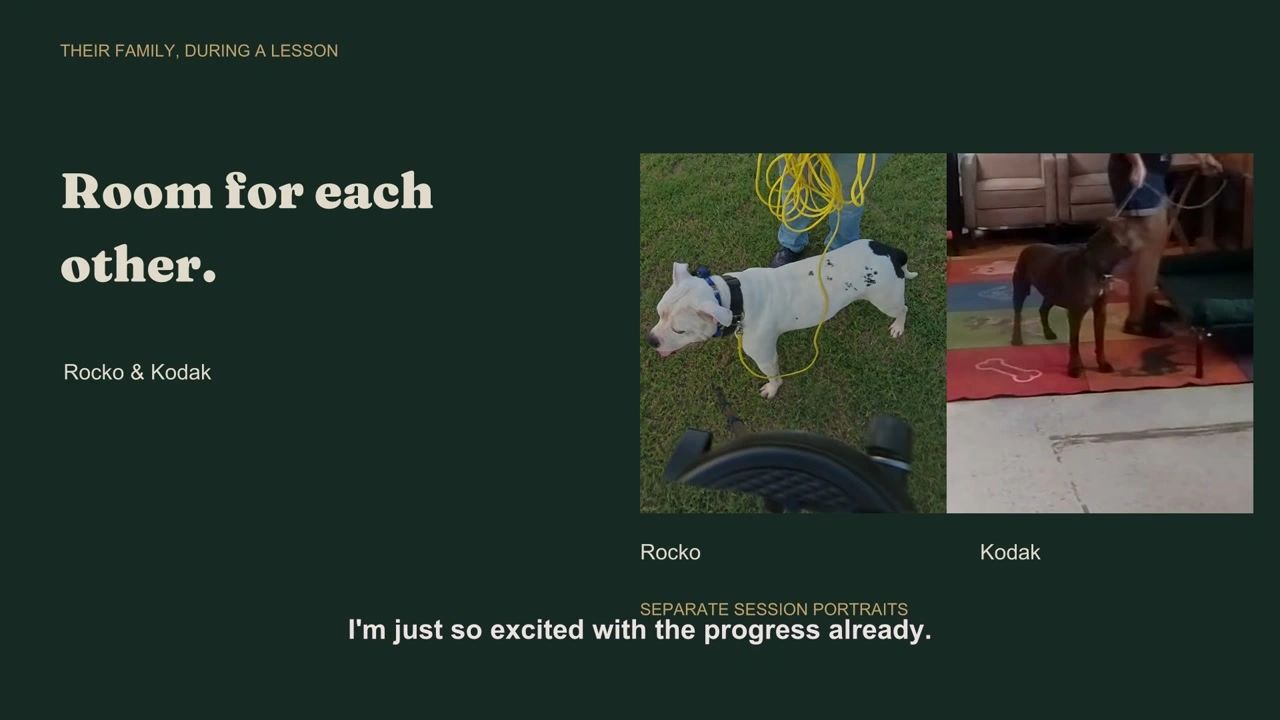
In Rocko and Kodak’s story, Room for Each Other, the family’s experience sits alongside training footage and owner education. Watch for how each dog is handled and how the people participate. Their story also describes supervised practice continuing at home. Keep that context with the scenes you remember.
2. Follow what happens before and after a response
Pick one visible repetition. What was the dog doing before the request? What did the handler say or do? When did the dog respond? What happened next?
You can pause and replay that small sequence. A dog lying down is one observation. Seeing the request, the response, and the handler’s next action gives you a more useful question to bring to a lesson.
If you’re unsure what a word means, our Academy guide to cues and markers separates a request for behavior from feedback and release language. It includes a source-linked explanation from Finn’s training material, so you can follow the vocabulary back to the recording.
3. Watch the person as well as the dog
Notice the handler’s position, movement, and timing. Watch an owner take a turn when the footage includes an owner lesson. What instruction do they receive? What do they practice? What changes in the next repetition?
That human side matters to the work you’ll do together. Angier K9’s local Board & Train programs include three full owner lessons. You get hands-on practice with your own dog; the videos give you another way to revisit the ideas and prepare questions.
4. Open the longer recording for context
Notice where the interaction takes place, what distractions are present, and whether the handler changes the task. Compare a specific moment with the surrounding footage rather than assuming the same response will happen in every setting.
We record the majority of each dog’s training sessions during their stay. Our longer sessions are recorded with a 360° camera and reframed to keep the dog in view, preserving the session as recorded. They are published on our YouTube channel. Use the training footage directory to keep exploring. Angier K9 Field Notes adds source-linked notes and collections for readers who want to go deeper.
Bring one useful observation to your consultation
A good note can be short: “At this timestamp, the owner steps away and the dog stays on the cot. How would you decide when my dog is ready for that kind of practice?” You’ve identified what you saw and connected it to your own household without assuming the other dog’s plan should be yours.
You don’t need to study the whole library before meeting us. Pick a story that interests you, save a moment, and tell us what you’d like life with your dog to look like.
Book a free in-person consultation with Angier K9. We serve Angier, Raleigh, and the Triangle and can talk through your dog’s history, your goals, and an appropriate training path.