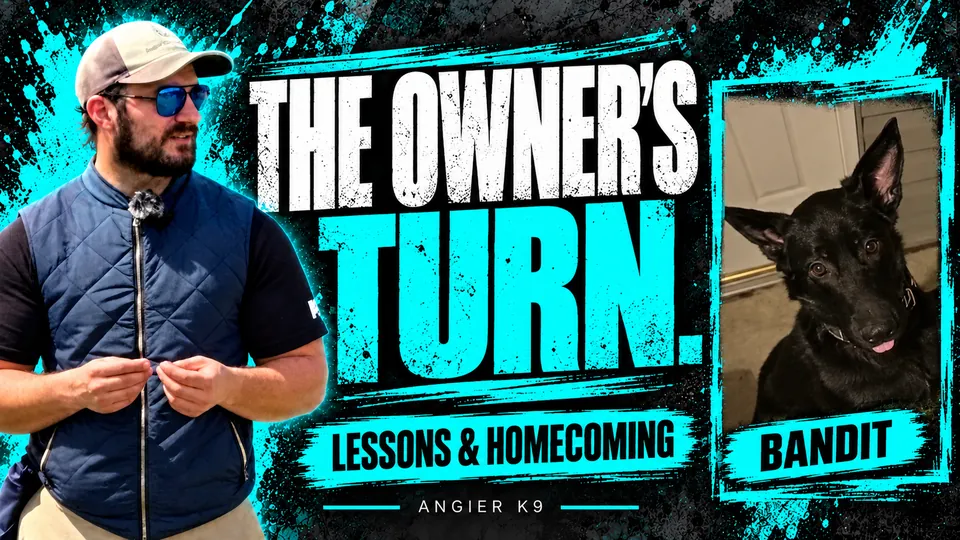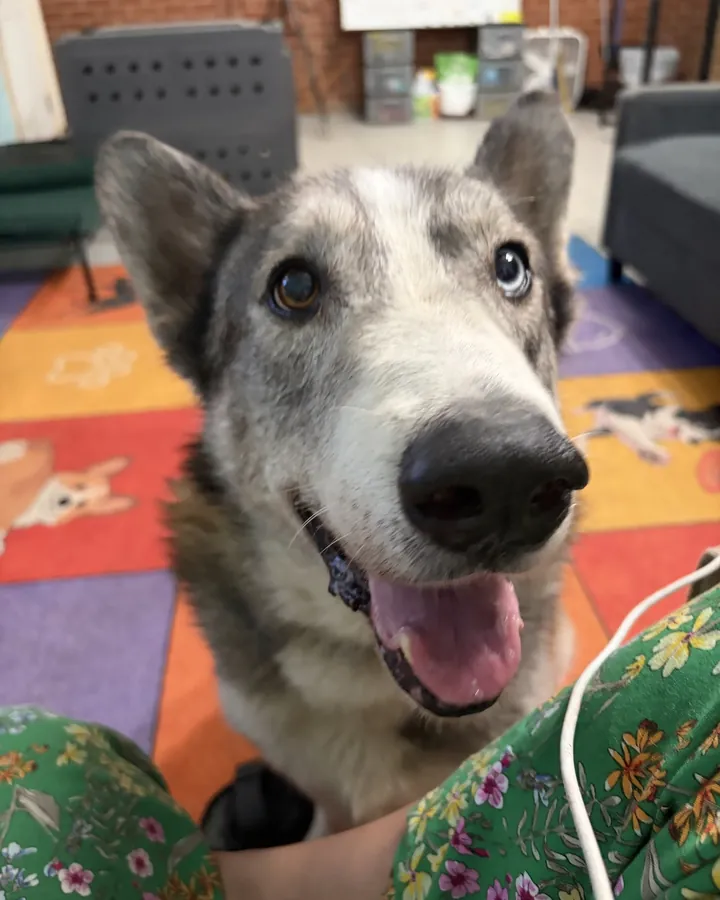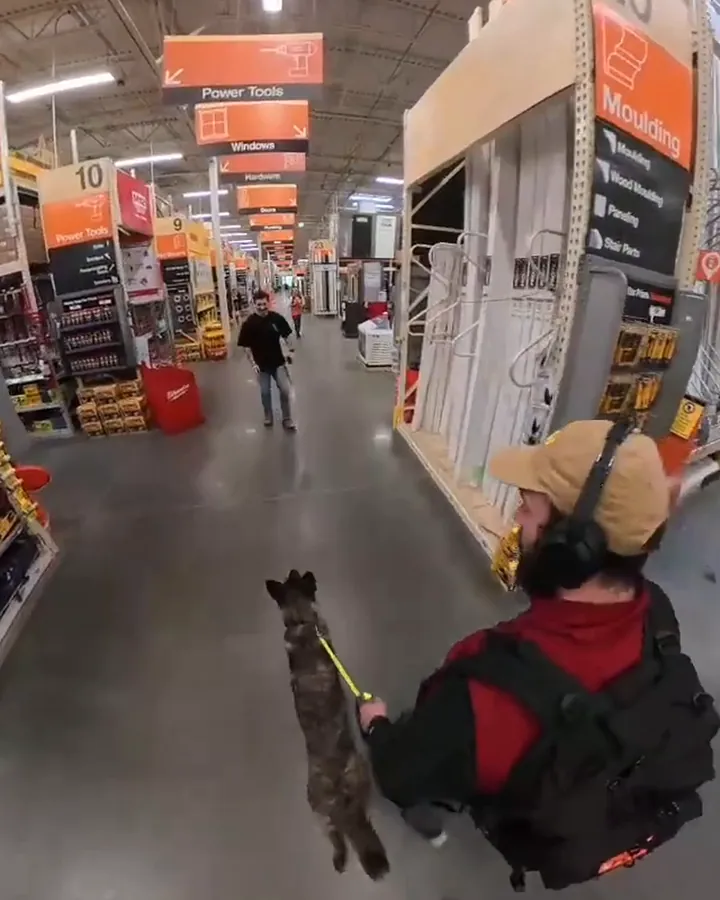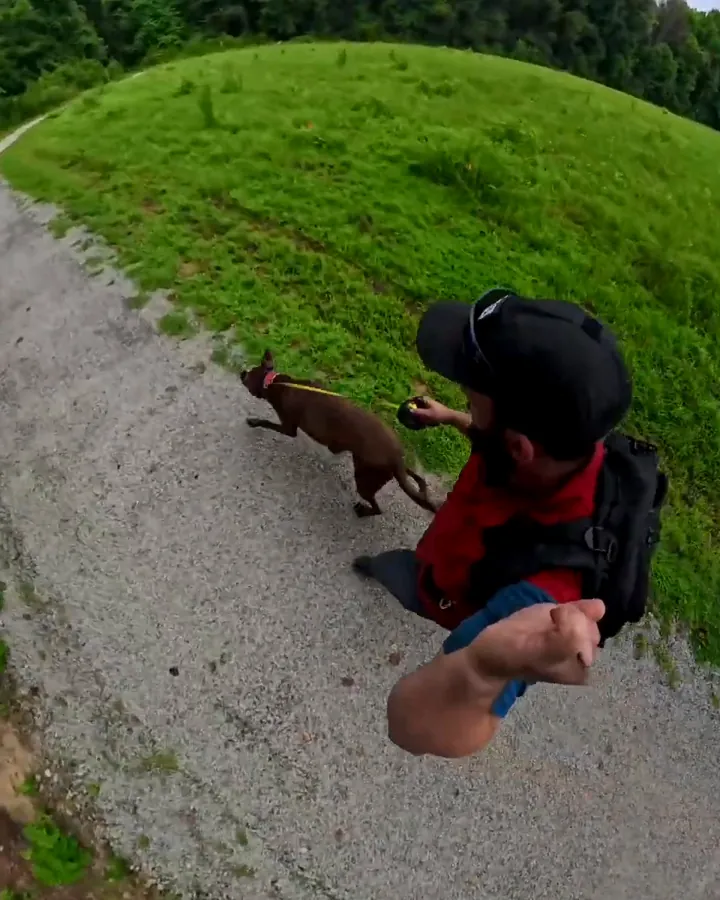
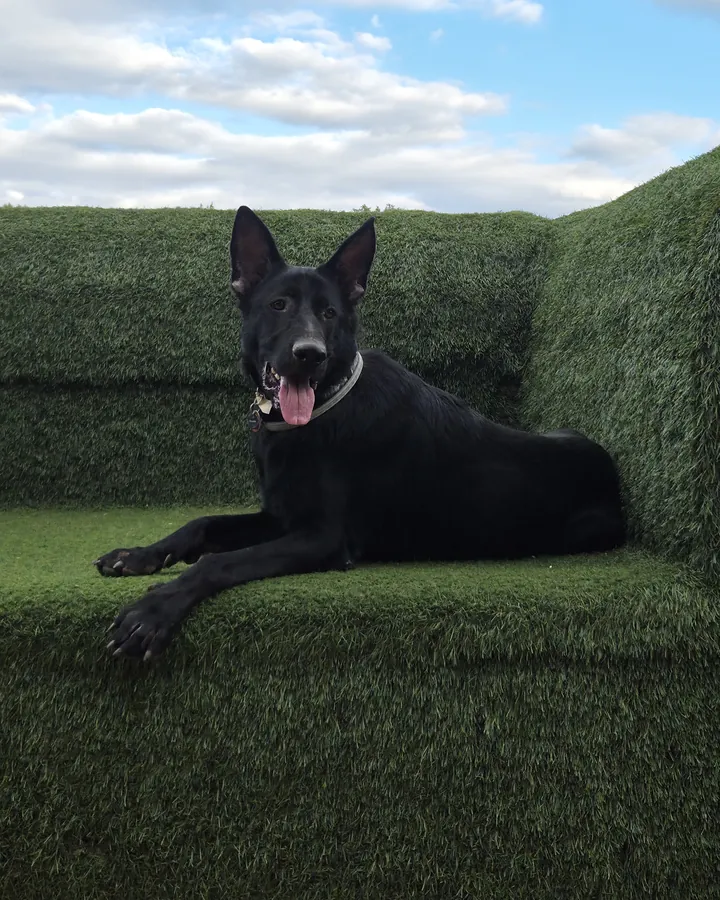
A dog who reacted to people.
Bandit’s owner wanted the basics and, above all, a dog who could do better around people, so he could take him places. Kelton knew the history. “He has been reacting to people,” he said on Bandit’s first filmed walk, and that is exactly why the outings mattered.
Trust came first. Bandit took a little longer to settle at the kennel, so the early sessions were play and relationship, with gloves on “just in case.” By the end, Kelton could say it plainly: “Bandit did not love me at first at all. He wanted to bite me. Now we’re buddies.”
The easiest first rep in twenty dogs.
Once the relationship clicked, Bandit learned fast. Teaching down for the first time, Kelton called it “the easiest first rep I’ve had” out of the last twenty or so dogs, and within about five reps Bandit was downing on the word alone.
Kelton’s read never changed: “even though he was reactive… he’s now a very stable dog.” On an evening walk in early September, a dog barked loudly from a car, and Bandit just blew it off.
“He surprised me.”
Kelton’s first owner lesson has two goals: the owner gets to see his dog, and he learns how dogs learn. Bandit’s owner had been watching the training videos, and he was candid: Bandit “surprised me a little bit with how well he’s been doing.” Before the program, Bandit would sit for food, “but that was about it.”
Then the teaching began: rewards that include play and the release to freedom, pressure that comes off the instant the dog gets it right, and consequences that are clear and fair. Kelton finished with the four windows, built toward calm liberty, the window he says is missing for most dogs.
Word first. Then help.
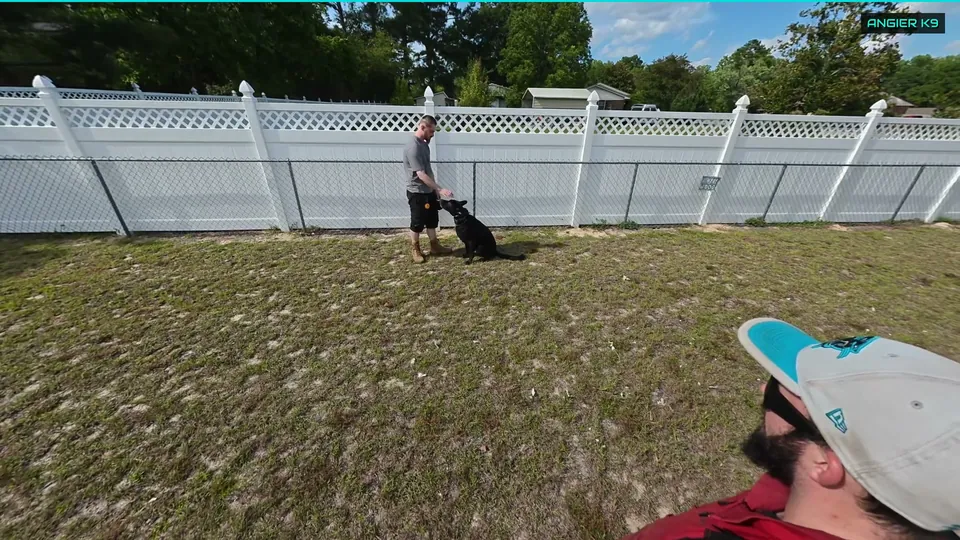
A week later the leash was in the owner’s hands. Kelton coached the details that make commands last: say the word before any hand signal, so Bandit keeps the verbal cue for the day he is off leash at a distance, and make the release exciting, because “the okay doubles as a reward.”
His progress report that day was clear. Sit and down were done (“he’s doing it like every time”), recall had “no issues,” and heel was the one skill he was still fine-tuning.
Totally perfect downtown.
By late September Kelton judged Bandit “good to go off leash and do all of his commands.” On his first off-leash day Bandit held a down while Kelton walked the length of a bridge with his back turned, a person walking up from the far end: “Bandit’s definitely fully off leash now.”
His go-home day was the capstone. He walked off leash among dogs, bikes and people at Dix Park, then took on Hillsborough Street in downtown Raleigh: buses, food on the ground, two passing dogs and “huge numbers of people.” Kelton’s verdict: “He’s been totally perfect.”
Kelton’s capstone test: “If you can be off-leash in downtown Hillsborough, you can take them wherever you want.”
“I feel pretty confident.”
That evening Kelton handed Bandit back with a clear verdict: “the training’s great, he’s doing good.” His picture of it: Bandit can lift a thousand pounds, so the two hundred of everyday life is easy. The owner had been watching the videos and felt “pretty confident in everything,” and Kelton agreed: no basic mistakes, and the word order was right.
“I think you’re going to do great,” Kelton told him, with a standing offer to text or call any time. Bandit said goodbye with hugs, and Kelton sent him off: “Have fun at home, buddy.”
Kelton’s plan for home: the verbal cue first, then follow through every time, “because otherwise it becomes optional.”