A muzzle on every outing.
Astro’s family describes a dog who changed after a serious incident with another dog. They looked for help, including redirection techniques they were taught at NC State, and from about age three he wore a muzzle whenever he went out. By his family’s account that went on for roughly four years.
A member of his family is direct about the stakes: Astro “was going to be euthanized if we could not get his behavior changed.” At his evaluation, Kelton later recalled, even Christian could not stop the barking and lunging.
The bluff stopped working.
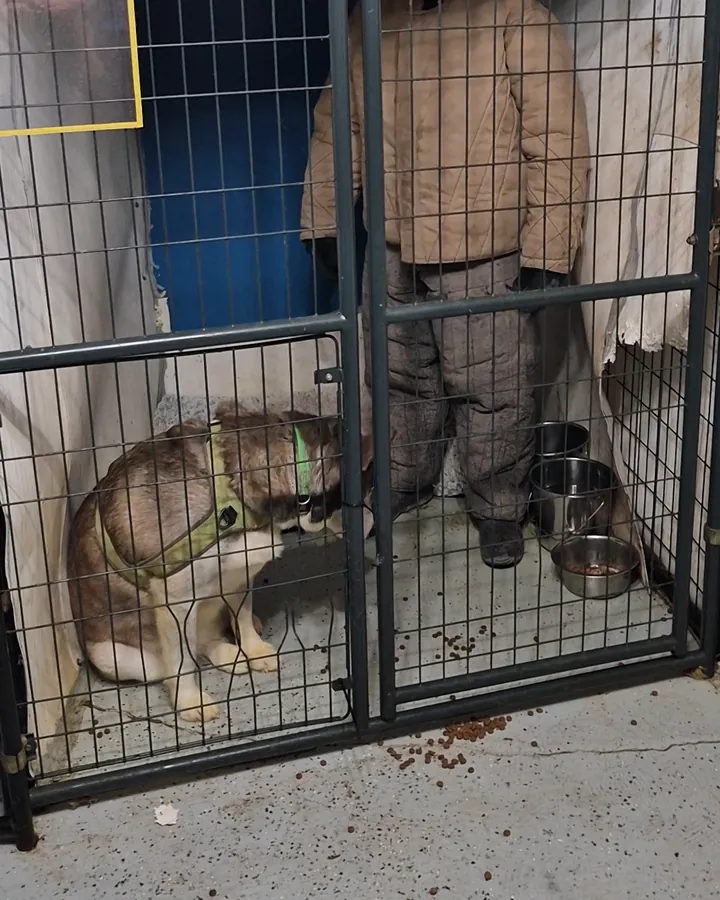
The first filmed session happens at his kennel. Astro is “pretty amped up,” and his trainer explains Astro’s expectation: keep barking and the person will leave. So the trainer opens the door and stays, neutral, through the barking and bluffing. He admits on camera that he pulled his hand away once, which gave Astro exactly the result he expected.
When the display stops producing anything, Astro’s behaviour shifts. “This is the first time he’s sniffing,” the trainer says. Astro shakes off, drinks, and sits.
Not friends originally.
The early work was not easy. On his first walk his trainer says Astro had bitten him “pretty hard a couple of times today.” He works in protective gloves, does not retaliate, and layers leash pressure onto a sit Astro already knows. Astro panics once; the pressure stays steady without more force, and he sits.
A week later, tug arrives. “He was tugging hard,” the trainer says on camera. At the go-home lesson Kelton names it as the turning point: tug is “how we made friends originally.”
A walk without the muzzle.
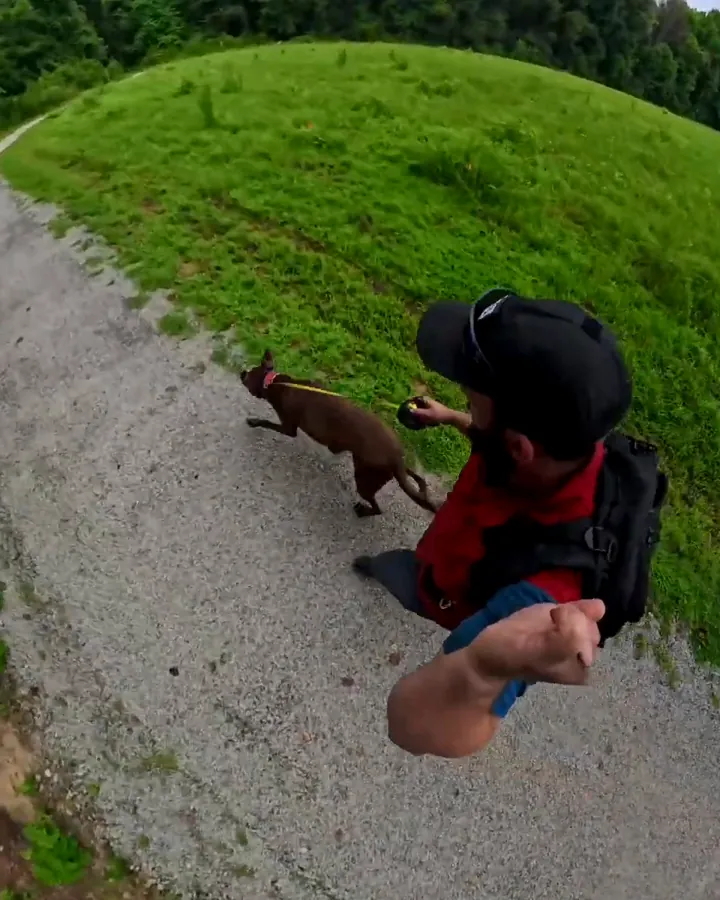
At the first owner visit Astro walks with his family unmuzzled. “It’s so beautiful seeing a muzzle off of him,” a family voice says. On the same walk he passes another dog on a long lead, and later holds his place with a small dog behind him and a cat on a lap. His trainer calls that “super hard,” and says he did well.
A later visit adds the next layer: a second trainer working on new people and places, which he calls “the most important part about his case.”
Neutral beside a barking dog.
At the go-home lesson Kelton walks the family through what keeps the training working: verbal cues first, consequences that are clear and well timed, tug to keep the relationship strong, and regular practice to keep it charged. As a barking dog passes, Astro stays calm. “That’s the kind of reaction I want to see,” Kelton says. “It’s neutral.”
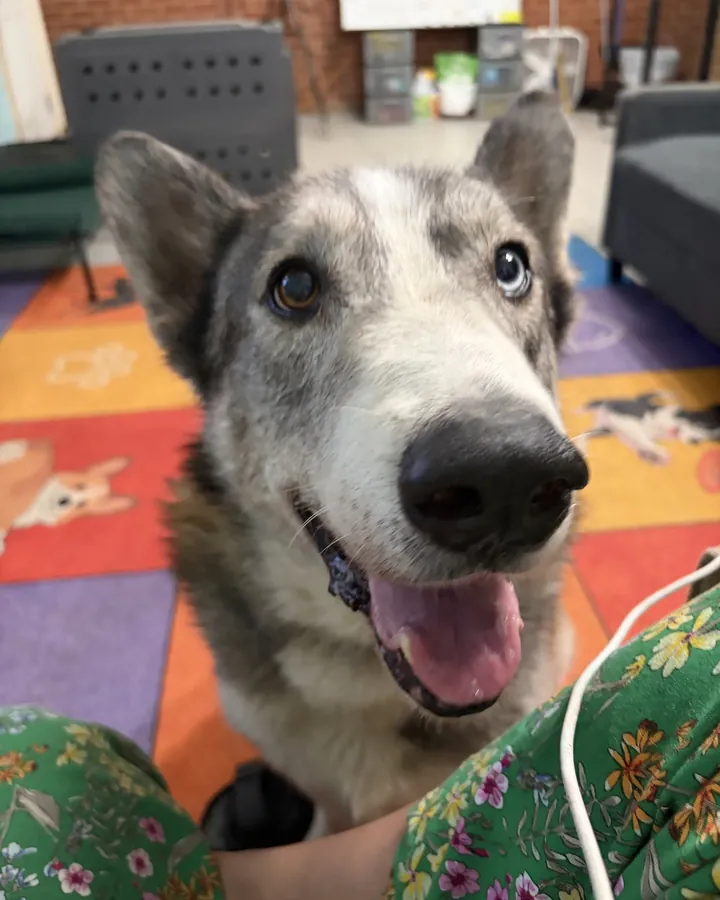
His owner then handles him, with Kelton holding a backup transmitter. The owner’s summary is simple: Astro was “never really a happy dog,” and “that’s mostly gone.”
Kelton’s plan for home: verbal cues first, greetings always optional, and short daily practice to keep the work charged.
A good report from home.
After a later summer stay, Astro’s owner gave a home report: “He’s walking well,” he is recalling, and “he’s not reactive to people on the walks.” When an off-leash dog surprised them at a corner, a simple “this way” was enough, and he followed.