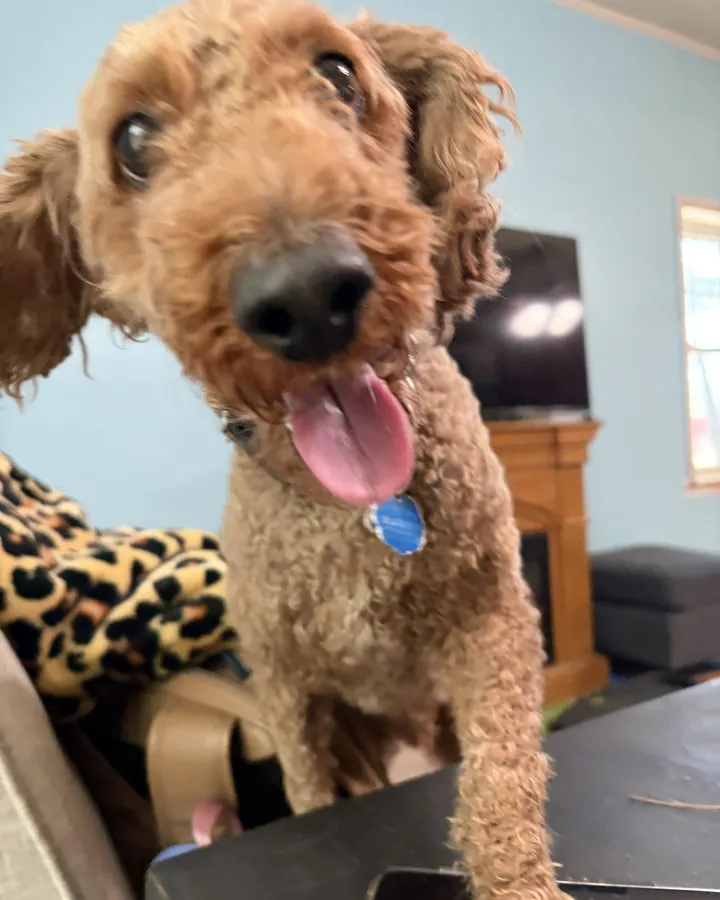
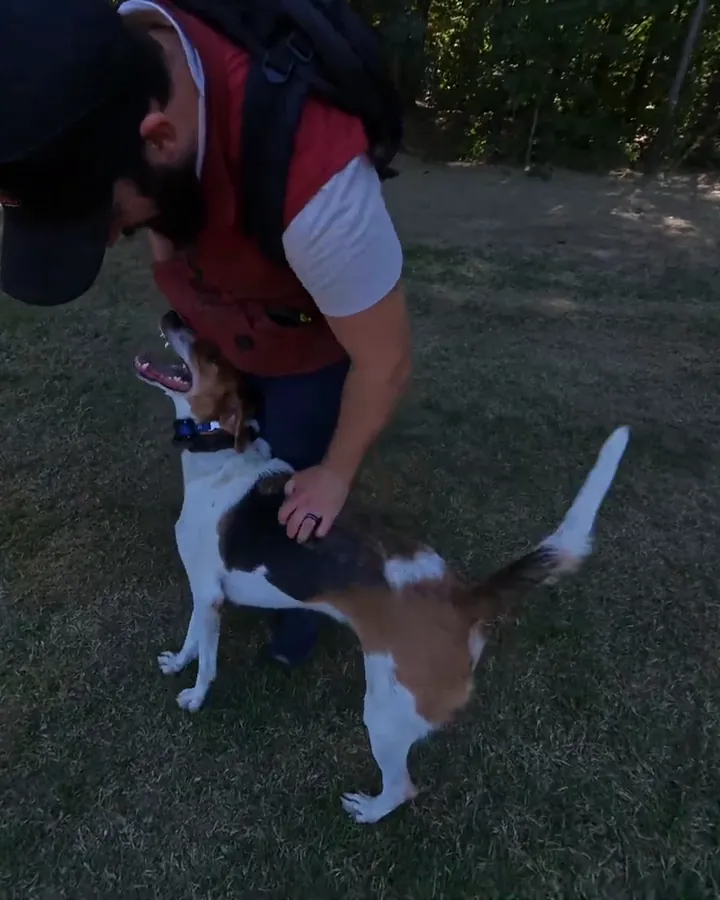
Easy at home. Hard on walks.
At home Beo was no trouble. “It’s really funny, we’ve never had an issue with him in the house,” his family told Kelton at the first owner lesson: he comes when called, he stays, he does it all.
Walks were another story. When another dog came by, his owner would hold the leash right up against him, ask for a sit and wait while Beo howled at the dog going by. It kept them close to home: “I have never brought him to like a walking park.”
The easiest dog in the set.
Beo picked things up quickly. By mid-September his sit, down and recall were “coming along really well,” and his trainer had found what drives him: “Love and freedom is all Beo wants.”
At the first owner lesson Kelton was clear: “He’s probably the easiest dog in my set this time.” Then, with his owner beside him and dogs nearby, Beo showed the one big problem, barking for the first time in front of Kelton, and that became the focus of everything that followed.
Totally chill behind another dog.
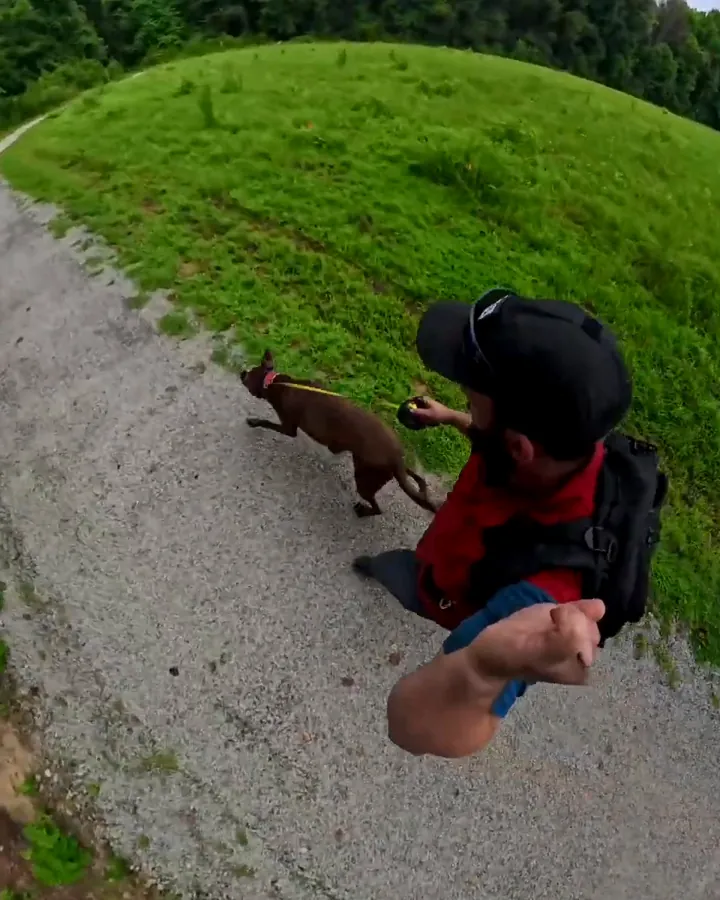
The next evening his trainer took Beo to a busy path with two goals: a clean heel, and “this thing that he does when he sees people or dogs.” The heel was “exactly what I wanted to see,” and when another dog walked ahead of them, Beo stayed “totally chill.” “This is big progress,” his trainer said, as Beo ignored a big dog barking from a house.
Four days later, at a greenway playground, about eight children and an adult walked past. Beo “went straight into the down, he stayed in it the whole time, he didn’t whine or bark,” his trainer told the family. “I’m really proud of him.”
“That is astounding.”
At the second owner lesson the family practised heel with coaching, and his owner noticed what had changed: at the end of the leash, instead of bracing into it, “he actually, like, felt the pressure and just came back.” That is leash yielding, his trainer explained, “a really important concept.”
Then a passer-by’s nine-month-old puppy came over to say hello, on leash, with coaching. There had always been “a little bit of anxiety and like tension” at the first approach, the family explained, “and there was none of that.” His owner’s verdict: “That is astounding. Like legitimately astounding.”
All the parks he wanted.
Later in that lesson his owner put the change in his own words: “It’s so much better for his quality of life now… now I can take him to all the parks I wanted to take him. It’s gonna be great.”
“All in all, I am very happy with everything that I’m learning,” he said. “I’m really happy with the foundation.” A family voice put it even more simply: “This is night and day.”
His trainer’s plan for walks: heel for crossings and blind corners, freedom for the rest, and the leash as a prop while the commands do the work.
Everything he was hoping for.
Before the handover his trainer practised giving cues the way the family does, softer and less crisp, “because I have a tendency to bark it out… I’m a trainer.” On October 1 Beo went home with a coached walk on his own neighbourhood route. Back on his old stomping grounds he was ramped up at first, and his trainer used the moment to show the family what that means and how to handle it.
His owner felt the difference heel makes: “From this position it’s a lot easier to maintain control of him.” His closing feedback: “You nailed everything on the head. Gave me a lot of good advice.”