“Pulled like a sled.”
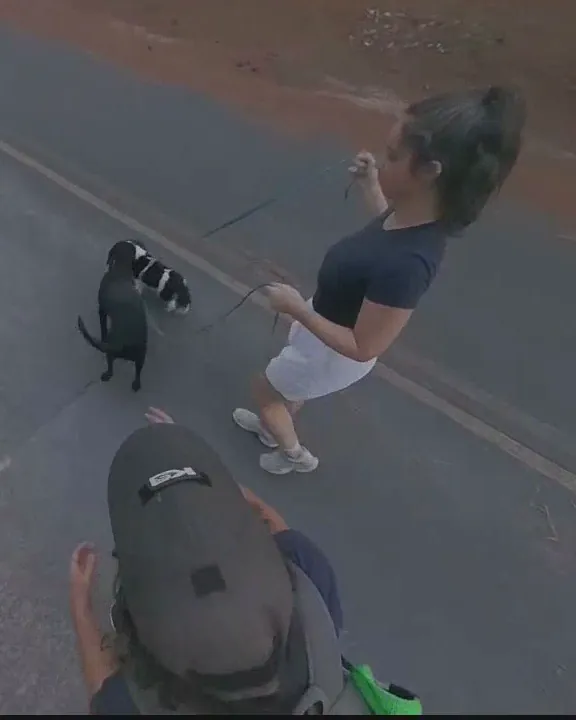
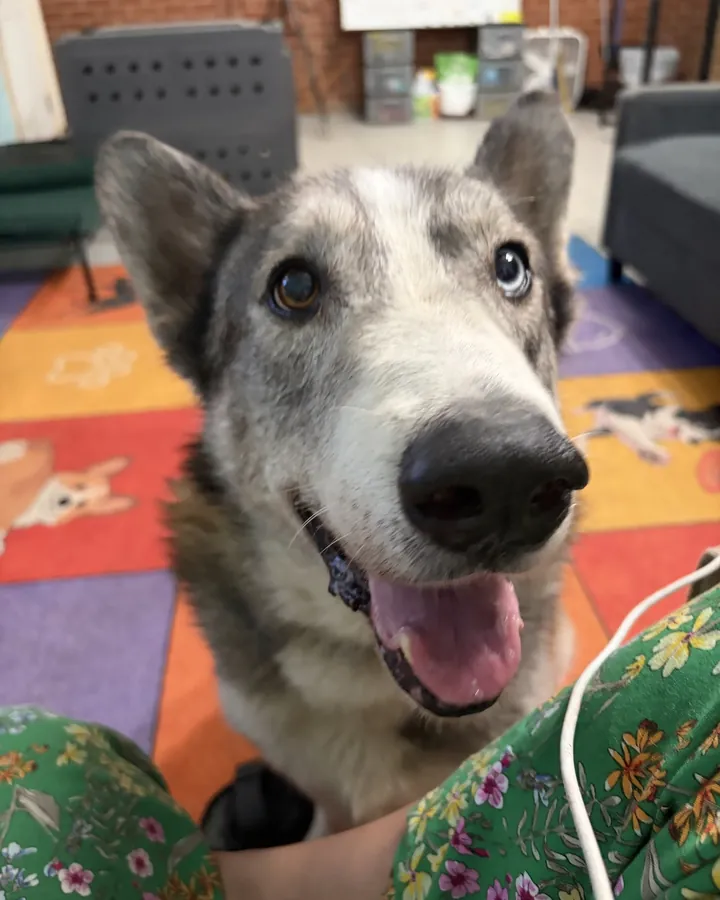
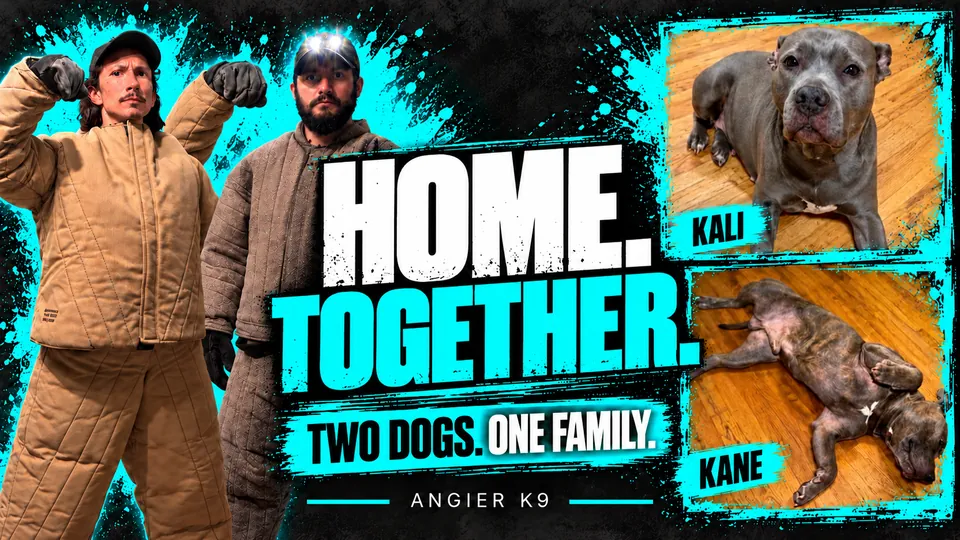
Kali and Kane share one home and one family. On walks, their family said, the two would pull toward other dogs, “especially together,” and “you feel like you’re getting pulled like a sled.” Trouble could come without warning, too: “you’ll think, oh, everything’s good, but it’s that one second.”
At home, recall was the worry. When Kali wanted something, the family said, she would “put them ears down and ignore you,” while Kane heard the call and took off. With “a big yard,” that mattered.
Two dogs, two programs.
Kelton trained the pair one at a time before putting them together: “I always build both separately… then it makes it easy to do it together.” Each program ran on what that dog loves most. Kane lives for tug; Kali works for touch, and rubs became her favorite reward.
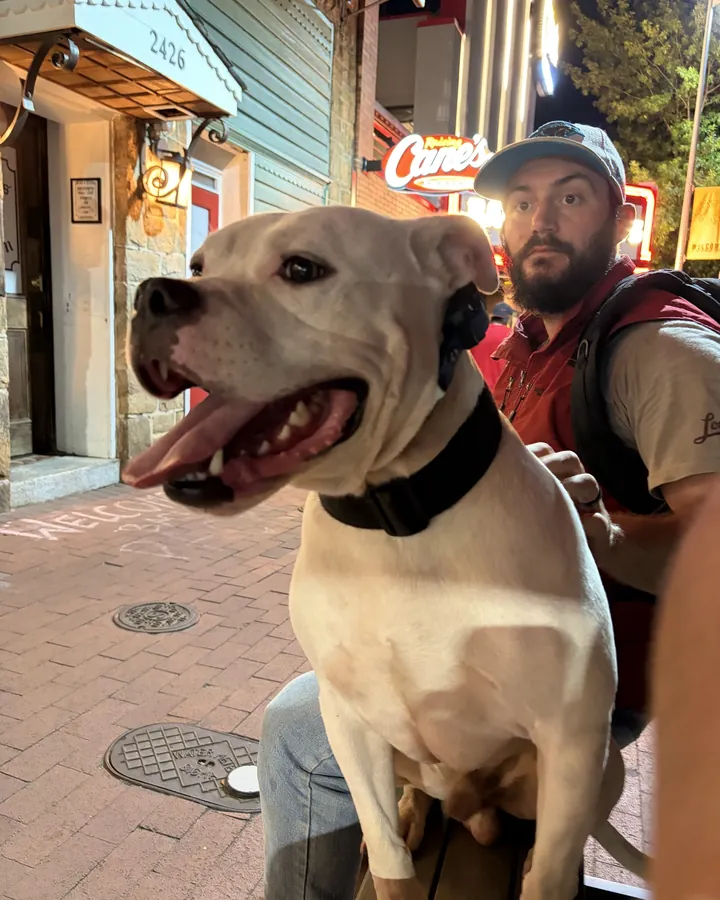
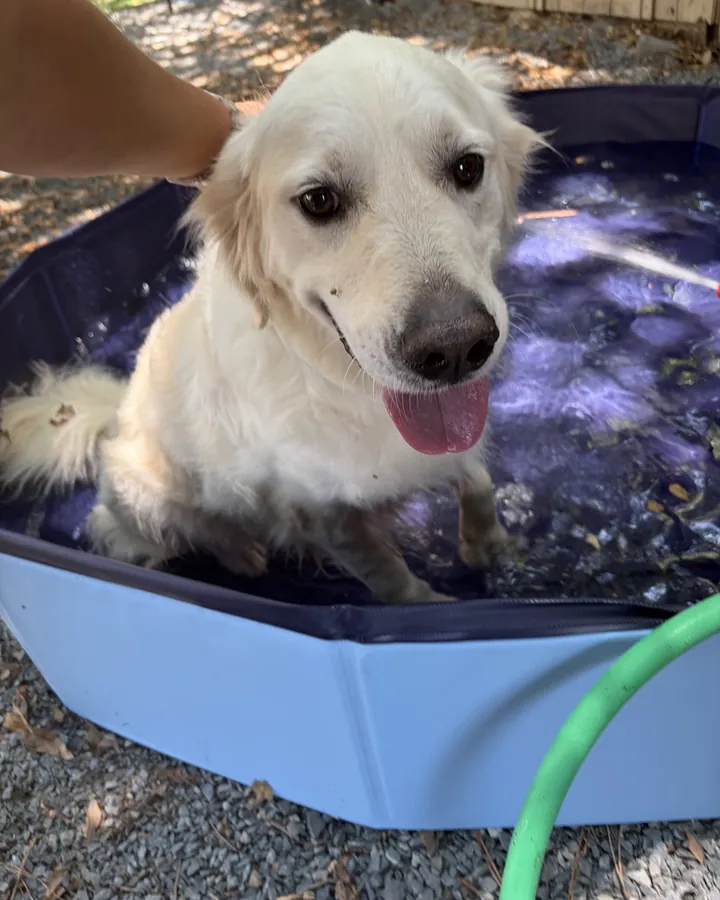
The team had a nickname for them early on. “We can’t stop calling them hippos,” Kelton told the family, and at feeding time the team even sang the Hungry Hippos song. When Kali looked unsure, his answer was encouragement, not more pressure, and he passed that rule on to her family.
“I’m so happy.”
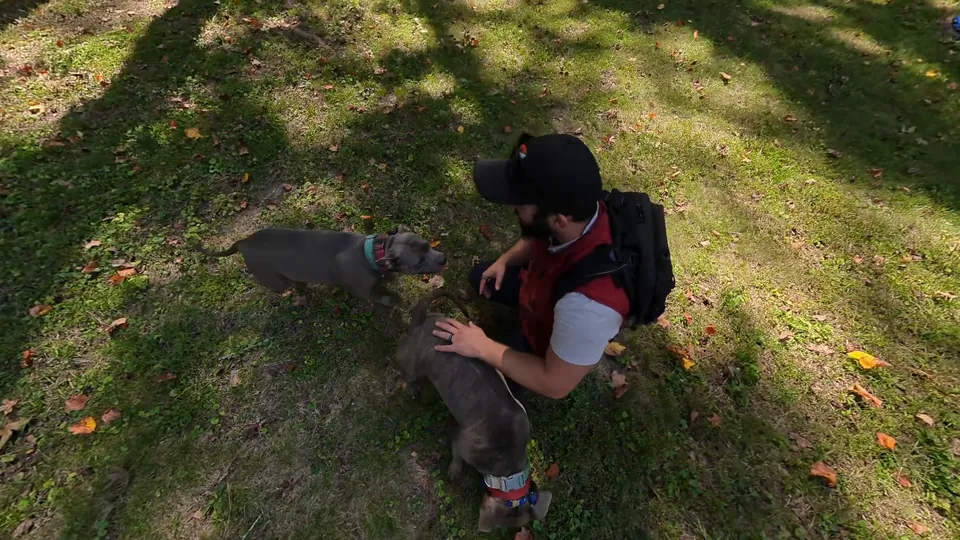
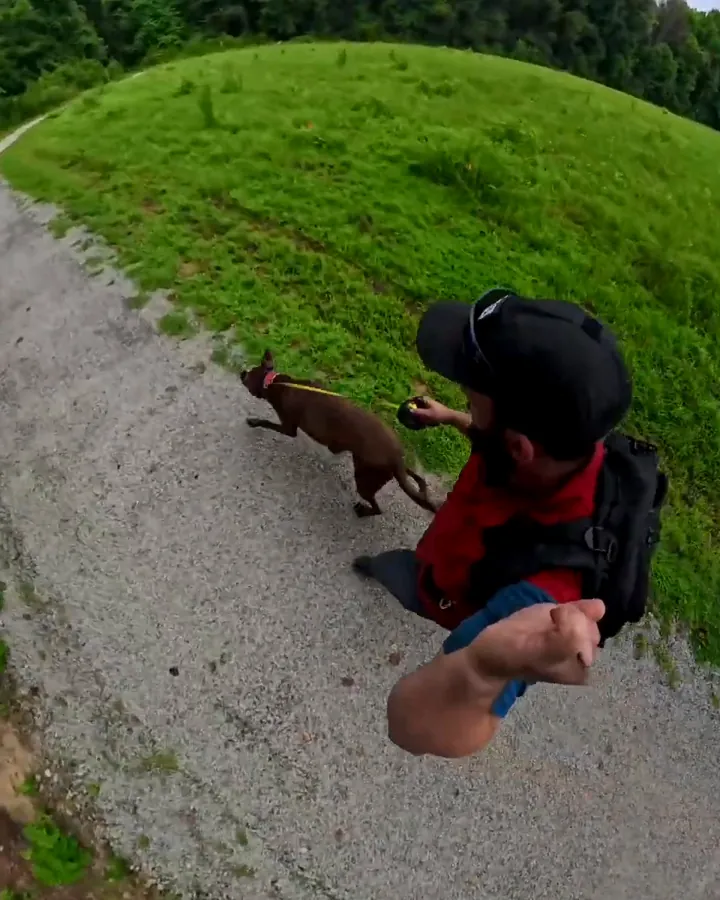
On September 14 the family met Kelton at a park to see their dogs, starting with Kane while Kali waited her turn in the truck. The aim of all three owner lessons, he told them, was to teach “the concepts you need to know to maintain the training.” On the way to a trash can, Kane walked past another dog by the pavilion, and the verdict was instant: “Better. Way better.”
Later a barking dog came along the trail. Kelton waited to see what Kane would choose, then called him over, and his family watched him come back: “He’s just doing so good with that. I’m so happy.” Kelton’s read: “He just did nothing. He was neutral. He didn’t care about it.”
Kelton’s goal for both dogs: “I want them to make good choices without input from me.”
Let’s go is not come.
Lesson two moved to the family’s own yard on September 22. Kelton’s progress report was strong: the down now flat, the heel tighter, and “I’m not having any issues with recall at all.” Then the leash went to the family, and he coached the details that make cues work for a new handler.
Inside, both dogs went to their cots and stayed put while the family walked away, and Kelton gave much of the credit for that place work to Claudia. A week later he took the pair off leash together at a park, downed both for a passing cyclist and a jogger, and called it “definitely doable.”
Kelton’s rule for the family: “let’s go” means keep moving with me; “come” means into the bubble beside you until you say “okay.”
Two words for the yard.
On go-home day, October 1, Kelton asked the family to head out the back door with both dogs off leash, so they could see how to manage it at home. Off the dogs went to explore, “incredibly pumped to be back home.” Kelton boiled yard life down to two commands: come, then a down until whatever caught their eye is gone.
Then the family took a turn calling, with Kelton coaching. When a dog looks to the trainer at first, he explained, the answer is the family “using the command regularly over a few days and reinforcing it properly,” and then “they’ll just like fully pull it over to you.” Later he called “Kali, Kane, come,” and both dogs came back across the yard to him: “Good job, guys.”
Kelton’s plan for the yard: let them roam and explore, call them back when something catches their eye, then a down until it’s gone.
“We definitely appreciate y’all.”
Inside, after a few tries and some help, Kali settled on her cot in a down: “She ain’t even going nowhere.” The family had the videos saved to a phone and, in their words, had “asked everything I can possibly think of.”
Kelton’s promise was simple: “we’re always available for any questions you have.” The goodbye was warm, “We definitely appreciate y’all. Thank y’all so much,” and the family had plans for the next chapter, too: “Y’all get our other babies in November.”
Kelton’s plan for home: the word first; if they don’t listen, follow through; then rinse and repeat.