
“I love him. He’s annoying though.”
King arrived in June 2026, a 15-month-old black shepherd with a thick coat and a lot of energy. On his first day a handler introduced him to the camera: “I love him. He’s annoying though.”
At home the trouble was guests. “He gets all ramped up and wants to jump all over people,” his owner explained, and a place command lasted about two minutes. The family wanted a dog who could hold his commands, in his own space, with ten or fifteen people in the house.
The ball became his paycheck.
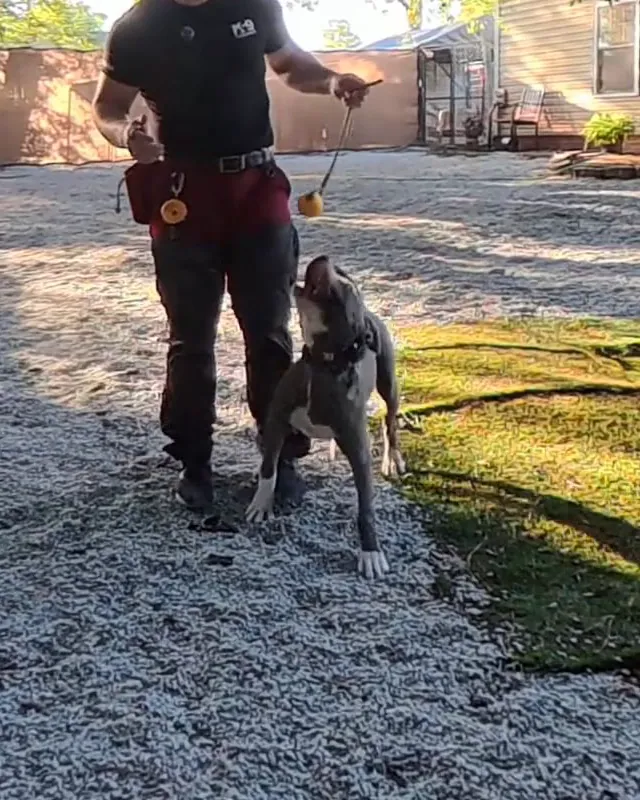
His trainer’s first read, on his first public outing: a young dog who didn’t know his commands yet, “really fun to train,” and “not like so anxious or anything.” The ball turned out to matter to King more than anything else, so play became his paycheck.
On his first day he held a thirty-minute place through a duck toy, a hat, another dog walking past, an open door and a dropped Dorito, and fell asleep on the pillow.
“But did you learn? I think you did.”
A week after staff found him frightened of the floor fans in a hardware store, Kelton took him back on purpose. No comfort, no correction, no pulling: “I’m just gonna wait.” Easy commands, the ball and the release word did the rest, and he worked beside the fans.
“I would ask if that was fun, but I don’t think it was,” Kelton told him on the way out. “But did you learn? I think you did.”
What gets used most gets trained most.
At the first owner lesson Kelton reported that King now held place for “30 40 minutes no problem or longer,” and set out his view of family life: “If you can tell them to chill and you can tell them to stop and you can ask them to come, life gets way better.”
At the second lesson, at the family’s home, the final weeks were planned around what the household would use most: place with people in the house, and a bark-on-cue “watch” his owner wanted for his wife and kids. Then his owner walked King off leash through their own neighbourhood.
Kelton’s rule for the final weeks: put the most work into the things the family will use most often.
“Well, he’s ready.”
In his last weeks King trained on evening walks to beat the summer heat, including Raleigh’s Hillsborough Street after dark, where he held downs on the pavement while people stepped around him. On the final evening his trainer summed him up: “Well, he’s ready. I can tell.”
“King is home.”
At the go-home lesson his owner ran the commands himself while Kelton watched for handler habits. He reported that King had held his down in the garage until released, even when his son came over to touch him; Kelton’s maintenance advice was short: no free passes, because King “learns quick,” and keep the tug and ball games going.
The kids had been asking “every other day, is he home yet,” and his son was waiting at the door. His owner’s goodbye to the trainer: “Took care of my boy. I’m grateful for you.”
The aftercare promise, in Kelton’s words: “The quicker you send us a message… the better, because it’s all about latency.”