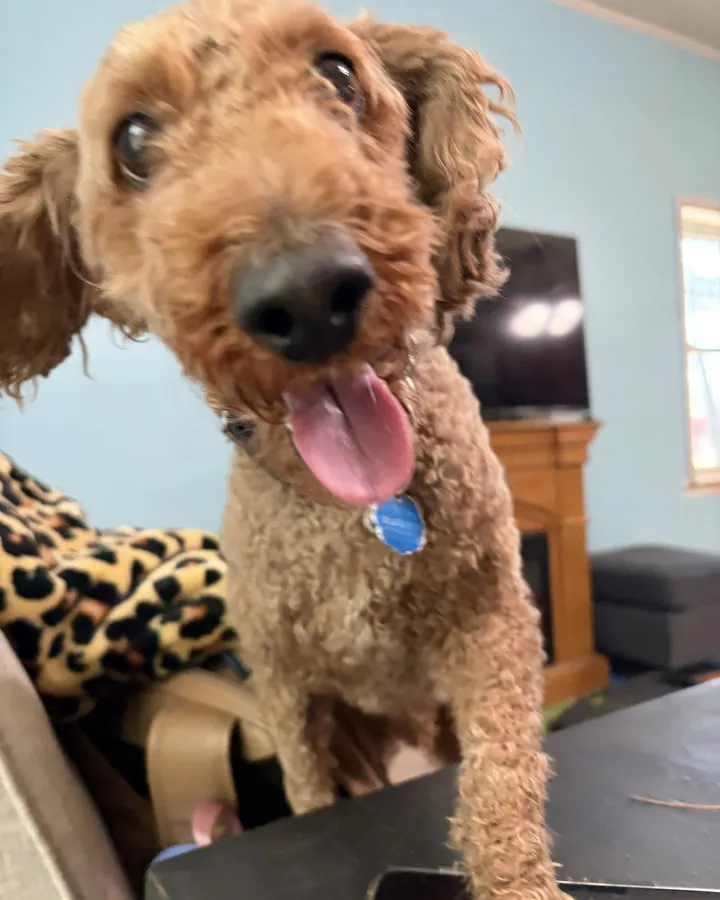
No way to call her back.
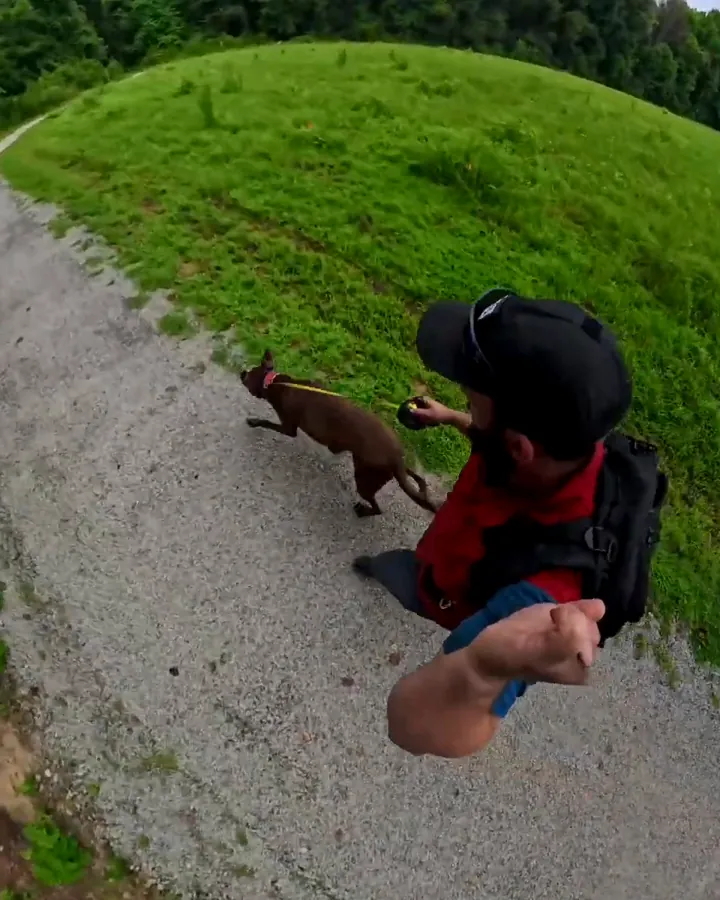
Kelton’s first read was clear. Sage was “very mellow” most of the time, but she knew no commands to any real level of fluency and broke them at the first distraction. The scary part was noise: a sudden loud sound could spook her, and then “you couldn’t call her back.”
Her family knew the stakes. Before she came to them, her owner told Kelton, she had run off during a trial adoption and been gone for two weeks. Kelton made that spook-and-run the priority, because it was “the part that’s… more likely to cause harm for her.”
Fewer reps, better reps.
Her program was shaped around how she felt. Her trainers tracked her emotional state in every session, and the data showed she was more nervous inside than out. When a skill stressed her, Kelton spaced the reps with long breaks so she could settle all the way back to calm: “it takes more my day,” he told her family, “but sometimes that’s the only option.”
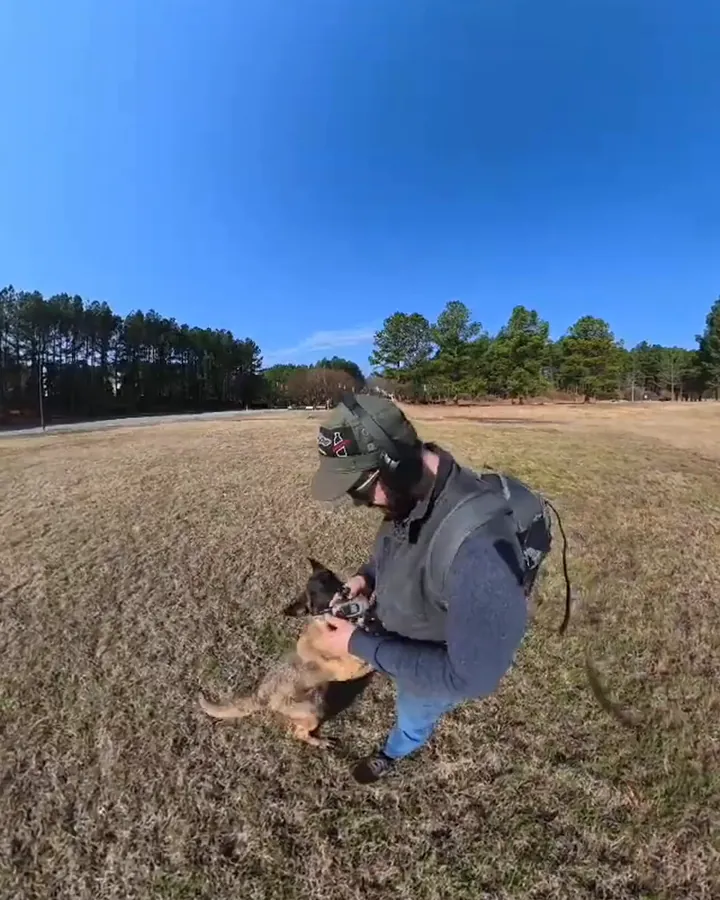
On a long line in the park she dropped into a down on the word alone, with no leash pressure and no e-collar. Her trainer was just as pleased with her mood: “she looks a lot more upbeat.”
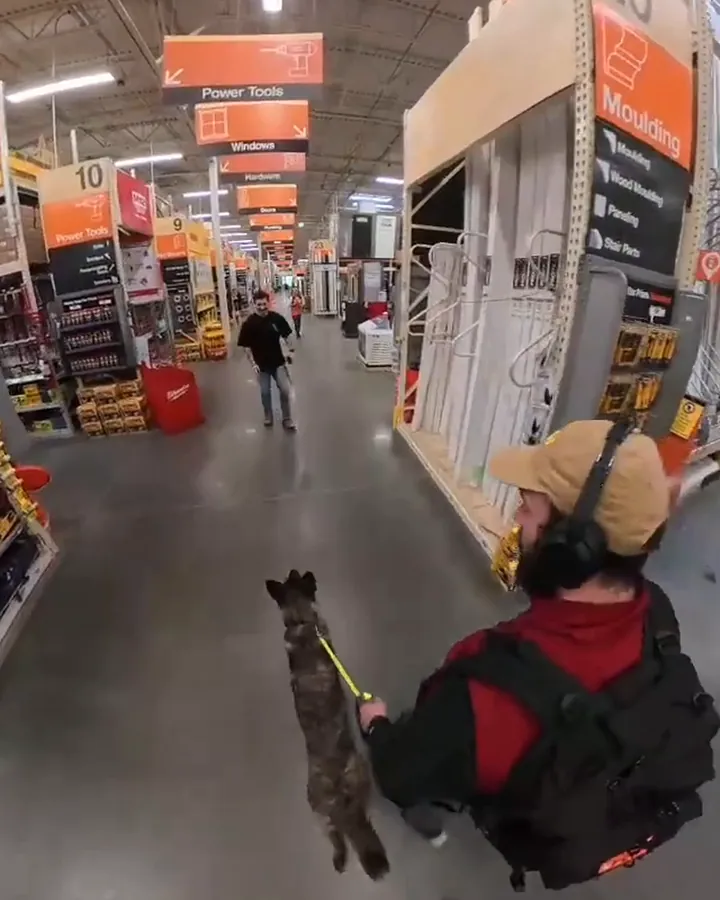
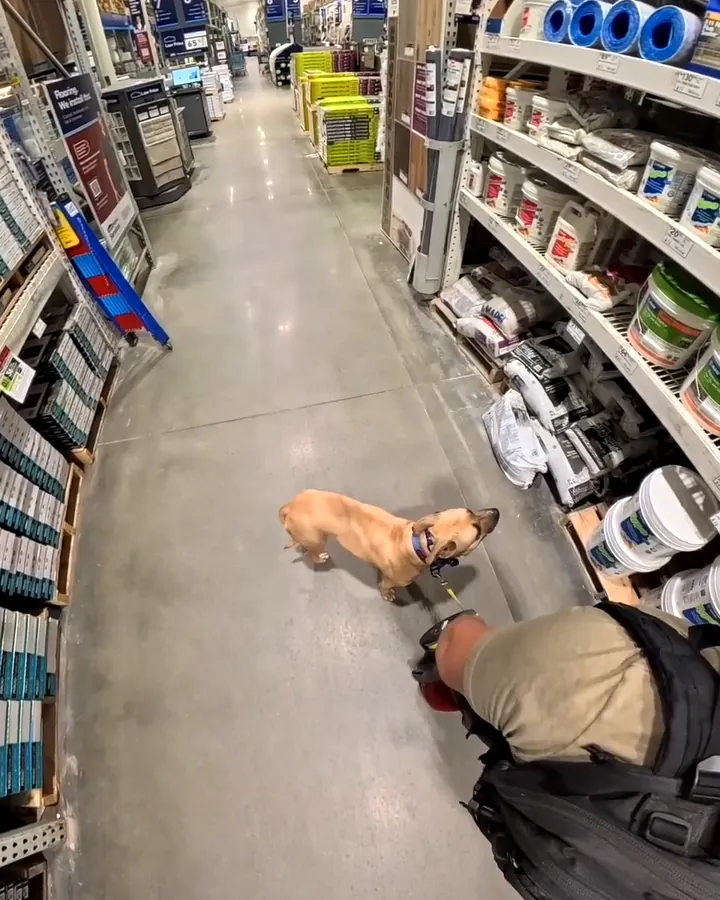
Working the aisles at Lowe’s.
At Lowe’s, Sage was a little unsettled at first, so her trainer let her settle in before asking for anything. Then came sit, down, come and heel through the aisles, and a passer-by stopped to say it: “She’s a sweetheart.”
When a store noise made her shut down, her trainer called it exactly the trigger he was looking for and planned return trips to work on it. His measure of progress was never just obedience: “emotional state change is the key to actually making progress… not just oh look I can make her sit and make her down.”
“I just have to rely on the recall.”
On her first off-leash park walk, her trainer took even the short line off and said it plainly: “I just have to rely on the recall.” She never bolted.
When a dump truck clanged out of sight she broke her down, and he reset her gently: “I know that was scary… Good reset.” A jogger ran past next. “She did fine with him running by,” he said, and later, “That’s a nice off-leash heel.”
Her trainer’s tip for a nervous moment: give her a direction. A simple “let’s go” gave her something to do instead of freezing.
She knows what to do.
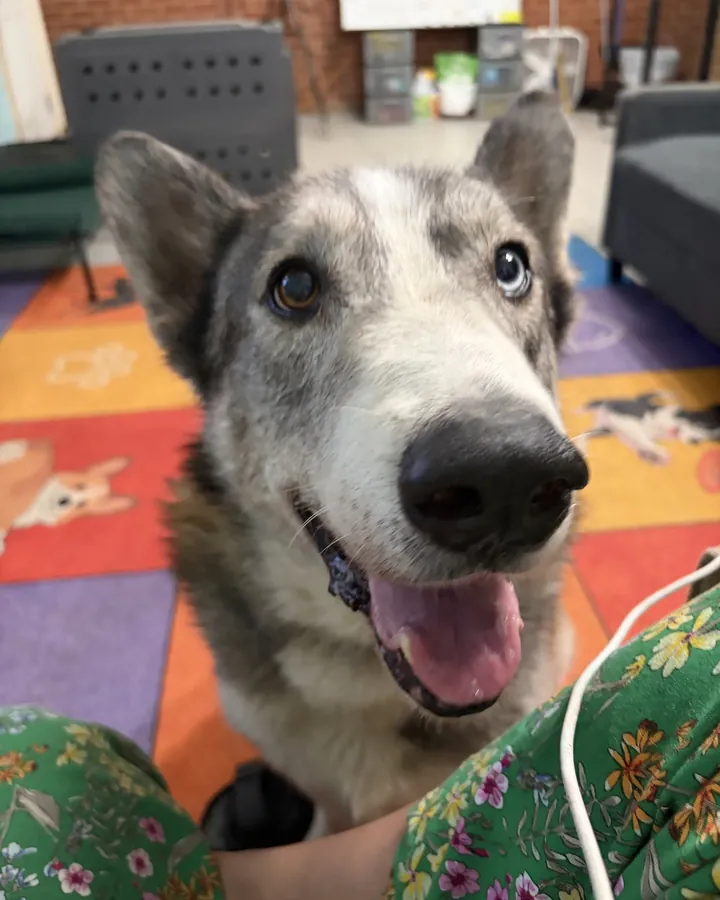
At the go-home lesson, Kelton showed her family the park video and ran through what she now knows: sit, down, heel and place, a heel entry on a single word, and “a nice off-leash heel now.” Then her owners took over, practising the basic sequence with Kelton calling each step: say it once, wait, release with “okay,” then love on her.
Kelton’s Sage-specific rule is the heart of her plan: if she freezes, encourage her rather than push, because “she knows what to do. She just gets unsure.” Her owner answered from the heart: “I saw how much love you gave her while she was with you.”
Kelton’s plan for home: say a cue once and wait, release with “okay,” then love on her. If a noise spooks her, stand still, let her come back to you, and leave once she is calm.